


The benefits of TMS therapy
rTMS is a form of neuromodulation that uses magnetic pulses to target and stimulate specific areas of the brain. For people with treatment-resistant depression, rTMS may help reduce symptoms and gradually create more room for recovery and improved daily functioning.
Non-invasive
With rTMS therapy, we target brain regions that are out of balance, without the need for anesthesia or invasive procedures.
Alternative for antidepressants
A treatment without the side effects of medication. In certain situations, rTMS can help support tapering off medication.
Proven effective
Clinical research shows that rTMS is effective in the treatment of conditions such as depression, anxiety disorders and OCD.
Included in depression guidelines
rTMS is a recommended treatment option in the guideline since May 2024. rTMS is well researched and used worldwide.
Long-term results
Many patients experience a more stable mood and fewer relapses for months to years after completing treatment.
Targeted treatment
Many people notice that their mood remains more stable for months to years after treatment, with a reduced risk of relapse.
rTMS vs. medication and ECT
While medication affects the entire body, rTMS targets the brain directly. rTMS helps restore balance in brain activity, with effects that can remain noticeable over the long term. With antidepressants, the effect often stops once the medication is discontinued.
In many cases, rTMS can help reduce or even taper off medication. It offers an effective treatment for depression and obsessive-compulsive disorder, without the potential side effects that are commonly associated with medication. Unlike antidepressants, rTMS therapy has minimal side effects.
rTMS therapy is a safe alternative to electroconvulsive therapy (ECT). Unlike ECT, which affects the entire brain, rTMS targets specific brain regions. This makes the treatment more precise and less invasive, with a lower risk of unwanted side effects and strong therapeutic outcomes.
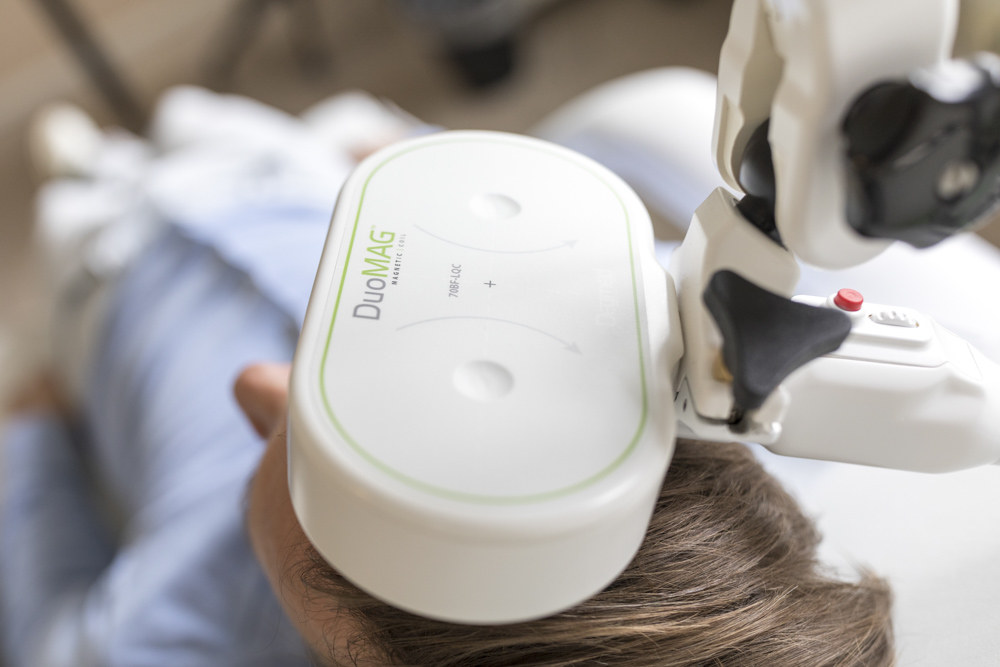
The power of neuromodulation
Combination therapy
With our integrated approach, we may combine TMS with talk therapy, so you receive both physical and emotional support. When TMS therapy is effective, it can reduce depressive symptoms, allowing talk therapy to be more effective. Talk therapy helps you develop skills and strategies to better manage negative thoughts. By alleviating symptoms through TMS, you are in a better mental state to learn and apply these techniques effectively. For the best possible outcome, combining TMS with talk therapy is recommended. This helps make positive changes more sustainable and allows you to build toward recovery step by step.
The effect of the treatment
The stimulation is aimed at restoring balance in brain regions that are underactive or overactive in depression or OCD. However, just like training a muscle, this does not happen all at once. It takes time, repetition, and consistency.
For most people, it takes 15 to 20 sessions
Before the first changes become noticeable. Sometimes it happens faster, sometimes more slowly, this says nothing about the eventual outcome. The effect of rTMS is cumulative: the more often the brain is stimulated, the more new connections can form. In this way, the brain gradually relearns how to regain balance.
What might you notice during the build-up phase?
Even if the major shift has not yet occurred, you may start to notice subtle signals along the way. These small changes are often the beginning of something bigger. They indicate that your brain is responding to the treatment.
- More energy throughout the day
- Less intense reactions to stress or negative thoughts
- Improved concentration or mental clarity
- Less rumination or overthinking, even if it still fluctuates
- Improved sleep quality, even if it is not yet optimal
What if you don’t notice anything (yet)?
It can also happen that you experience little to no change during the first weeks. Everyone responds differently, some brains simply need more time to respond to the stimulation. In some cases, a clear shift is only noticeable after around 25 sessions, while others may feel a difference after just 10 sessions. It’s important to complete the treatment course as agreed and discuss your experience with your clinician.
Emotional fluctuations are part of the process
Some people notice that during the early phase they become more emotional, feel more tired, or experience a temporary setback. That may sound unsettling, but it is a well-known phenomenon in brain stimulation. Your brain is essentially “reprogramming.” During this phase, old patterns may briefly resurface before they begin to fade. This, too, is part of the process. Always feel free to discuss this with your clinician, so you can monitor together what is happening.
Evidence-based treatment with a personal touch
Combining neuromodulation with personalized care to help you achieve meaningful, lasting improvement.
Personal contact
Get in touch using our contact form if you have any questions or would like more info.